- vikasriam
- April 21, 2024
Introduction to Network Topology
Network topology refers to the arrangement of the various elements (links, nodes, etc.) of a computer network. Essentially, it is the topological structure of a network and may be depicted physically or logically. The choice of network topology can affect the performance, scalability, and fault tolerance of the network, as well as the cost and complexity of its underlying infrastructure
Why is Network Topology Important?
- Performance: The topology of a network influences the efficiency of data flow and communication within the network. Some topologies, like the star topology, may be better for handling large amounts of traffic without bottlenecks.
- Scalability: Certain topologies are more scalable than others. For example, expanding a network with a bus topology might be more complex and disruptive than expanding a network with a star topology.
- Fault Tolerance: The ability of a network to continue operating even if one or several nodes fail is affected by its topology. In a ring topology, for instance, a single failure can disrupt the entire network unless redundancies are built in.
- Cost: The physical layout of a network topology affects the amount of cabling needed and the type of network devices required, which in turn influences the overall cost of the network.
Types of Network Topology
1. Bus Topology: All devices are connected to a single central cable, called the bus or backbone. Data travels in both directions on the bus, and it stops being used if the main cable fails.

2. Star Topology: All devices are connected to a single hub, switch, or router. Data between devices must first go through the central node. This topology is popular because of its inherent fault tolerance and ease of setup.
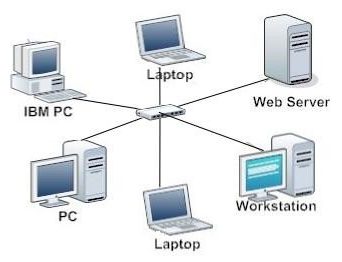
3. Ring Topology: Devices are connected in a circular format, and each device has exactly two neighbors. Data travels in one direction, and a break in the ring can result in network failure unless there are redundant connections.
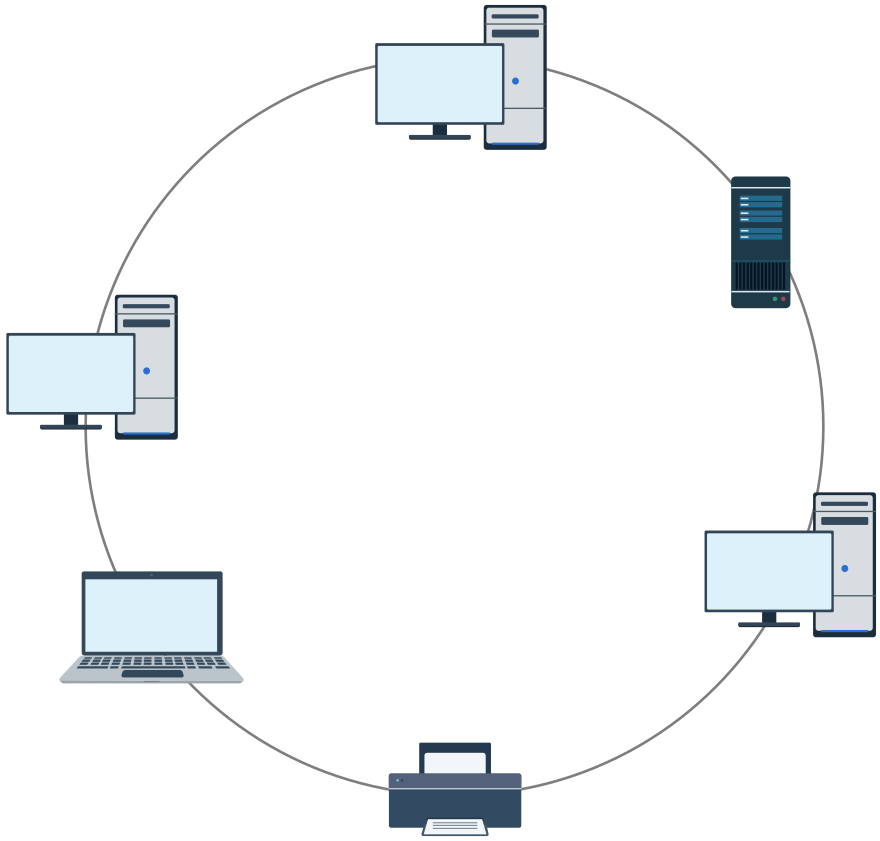
4. Mesh Topology: Every device has a dedicated point-to-point link to every other device. A fully connected mesh network can be very expensive and complex, but offers excellent fault tolerance and performance.

5. Hybrid Topology: This is a combination of two or more different topologies. Hybrid topologies inherit the advantages and disadvantages of their component topologies and can be designed to maximize benefits while minimizing downsides. For example, a star-bus hybrid combines elements of both the star and bus topologies
6. Tree Topology: A variation of the star topology, in which each hub functions as the root of a tree of devices. This is common in large networks.

Comparison of different types of Network Topologies
| Topology Type | Description | Common Use Cases | Typical Number of Systems | Relative Cost |
|---|---|---|---|---|
| Bus | All devices connected to a single central cable. Simple, but failure of the cable can take down the entire network. | Small networks, such as small offices or local networks. | 2-10 | Low |
| Star | All devices connected to a single hub or switch. If the hub fails, the network fails, but individual link failures do not affect others. | Widely used in home networks and within modern office environments. | 5-100+ | Medium |
| Ring | Devices connected in a circle. Data travels in one direction, and a single break can disrupt the network unless redundant paths exist. | Used in some metro networks and in school campuses or LAN networks where redundancy is manageable. | 10-100 | Medium |
| Mesh | Every device connected directly to every other device. Offers high reliability and redundancy. | Used in critical applications, such as military installations or where communication must be guaranteed (e.g., emergency services). | 5-30 | High |
| Hybrid | Combines two or more different topologies to capitalize on the strengths and minimize the weaknesses of each. | Large enterprises with diverse needs and environments, adapting to different department requirements. | Varies greatly depending on configuration | High (variable) |
| Tree | A variation of the star topology, creating multiple tiered star networks. Useful for large branching networks. | Used in large corporate networks, educational institutions, and ISP distribution models. | 50-1000+ | Medium to High |
Understanding these topologies and their impact on network design and functionality helps in creating networks that are efficient, cost-effective, and resilient against failures.
Recent Blog Posts
-
Network Rack Dressing Tools: Essential Equipment for Efficient Cable Management

-
Network Cable Management 101: Why It Matters

-
Everything You Need to Know About Structure Network Cabling

-
Cabling Requirements for Wi-Fi 6: Ensuring Efficient Network Performance
-
10 Firewall Features That Will Optimize Your Performance