patch cord orders · Buyer guide
Patch cord orders need a measured route and an agreed acceptance method. A bulk patch-cord order can look simple until short cords pull across the cabinet and long cords bury the managers. Treat it as a component schedule with a verification plan. The useful buying question is whether the delivered cords fit the actual channel, cabinet and service requirement.

Patch cord orders: measure the route first
Measure the intended path through the cable managers, including comfortable service access. Count by endpoint pair rather than ordering one length for every connection. Keep a small documented allowance for uncertain positions and agree who approves substitutions. An attractive front photograph does not establish that the rear connections can be maintained.
Identify the exact construction
Ask for an exact manufacturer part number, conductor and connector specification, category, shielding where relevant and the selected product’s application restrictions. The CommScope cable image is a product reference, not a picture of the cord being ordered. Require the bidder to identify the actual cord separately so that a generic image cannot stand in for a bill of materials.

Check a representative delivery before mass installation
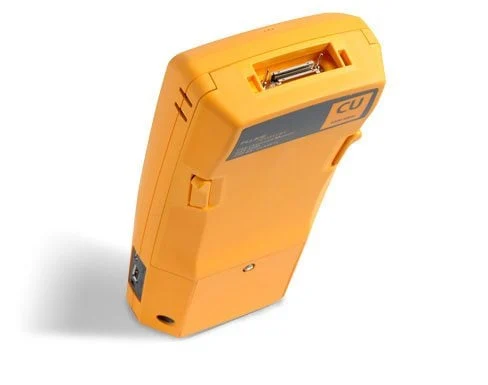
Compare labels, lengths and physical fit with the order. Ask the engineer whether patch-cord testing or channel verification is appropriate for the stated acceptance objective; Fluke’s guide distinguishes these arrangements. Quarantine unexplained substitutions and document any approved change. Installation labour and disruption can outweigh a small saving on an unsuitable cord.
Patch cord orders: delivery checks
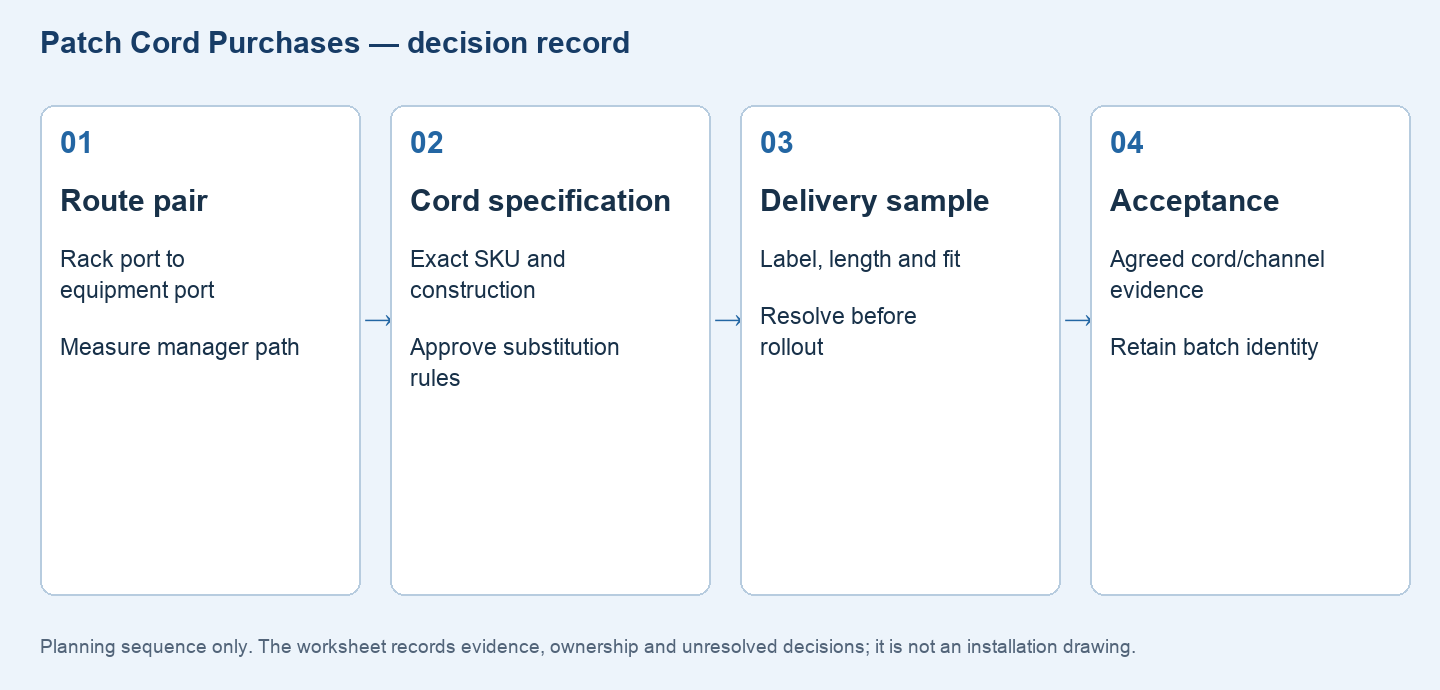
Use the rows below to compare proposals. Enter the actual evidence reference, accountable owner and unresolved decision against each item. Keep provisional assumptions visible when asking bidders to revise their prices.
| Decision | Evidence to request | Purpose |
|---|---|---|
| Route pair | Rack port to equipment port | Measure manager path |
| Cord specification | Exact SKU and construction | Approve substitution rules |
| Delivery sample | Label, length and fit | Resolve before rollout |
| Acceptance | Agreed cord/channel evidence | Retain batch identity |
Questions buyers ask
Is the jacket colour a performance specification?
No. Colour can support an agreed identification scheme, while the exact construction and test evidence determine technical suitability.
Can every rack use the same length?
Only if the actual routes support it. Prepare a length distribution from equipment positions and manager paths.
Does a category label remove the need for checks?
No. Reconcile the delivered product with the approved bill and the acceptance method appropriate to the project.
Should spare cords be included?
Define a spare quantity by useful length and application, with storage and ownership, instead of an unlabelled mixed bag.
Can RIAM price from a rack photograph?
A photograph helps orientation, but a port schedule and dimensions make the ordering and labour assumptions much more reliable.
Manufacturer research and scope
Fluke Networks: link and channel test models, reviewed 31 October 2026. The buying worksheet is RIAM editorial analysis; it is not an OEM-approved design. Confirm current product, software, support and local requirements for the selected bill of materials.
Brief RIAM with the evidence
Share the existing inventory, the specific service or buying decision, available records and access constraints with RIAM’s copper services team. Ask for a scoped assessment with deliverables, responsibilities, exclusions and acceptance evidence. Site work and production changes require the responsible owners’ approved plan.