
Copper · Buyer guide
Your new office already has network sockets. Keeping them could reduce disruption, but an occupied patch panel is not proof that the links suit your next network. Before accepting either a full replacement quote or a promise to reuse everything, commission a link-by-link decision record. The useful outcome is a defensible list of what stays, what needs repair and what cannot yet be assessed.

Start with the application, not the cable age
Tell the assessor what each area will carry: ordinary desk access, higher-speed uplinks, access points, phones or powered devices. Record the required application and power needs separately. An old installation can contain mixed cable and connector generations, while a recently fitted link can still have damaged terminations. Ask the assessor to identify the actual installed components and accessible route, rather than infer performance from the jacket label alone.
Agree access before pricing the inspection. Locked rooms, occupied desks and inaccessible ceiling sections can leave a sample incomplete. Mark those links as untested, with a reason and follow-up cost. A clean-looking report should never turn an inaccessible link into a pass.
Make the test answer the buying question
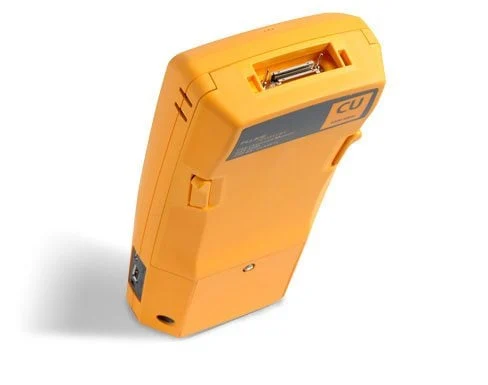
Fluke Networks distinguishes basic verification, application qualification and standards certification. It also explains that a report must be checked for the selected limits and the actual link tested; a component advertised as “Fluke Certified” is not an endorsement by Fluke. Fluke Networks: what certification reports prove
For your procurement brief, name the required test scope, link identifiers, report format and acceptance limits. If a manufacturer-backed system warranty is part of the proposal, obtain its specific eligibility and testing conditions. Do not assume a continuity check or an old PDF establishes that entitlement.

Separate a repair from a replacement
Ask for a reason against every recommended intervention. A damaged patch cord, poor termination and unsuitable permanent route are different jobs with different disruption. Price the identified repair, its retest and the residual limitation together. Retain the first result as well as the final result so that a repair can be traced.
Where a link is kept, record what was actually accepted. If your application changes later, the same record helps an engineer judge whether the earlier decision still applies. Where replacement is proposed, include the removal boundary, making-good work and any service interruption. That makes reuse and replacement comparable without inventing a universal cable lifespan.
Use the exception list to release the next stage
Suppose an illustrative audit covers 80 link IDs: 60 accepted, 12 needing termination work and eight inaccessible. The useful next order is not automatically 80 new links. It is an agreed repair and access plan, with quantities clearly provisional until the eight outstanding links are checked. These counts are an example, not a RIAM survey result.
Before authorising work, have the network owner approve the decision register and the areas where uncertainty remains. Ask RIAM to scope that assessment around the floor plan, service requirements and available access window. The completed record should support the refurbishment decision, not merely advertise a tester brand.
Keep, repair or replace register
Use this worksheet in the supplier discussion. Replace example entries with your project information; it is not a completed survey or approved design.
| Link / use | Evidence required | Decision to record |
|---|---|---|
| Desk link / required application | Mapped endpoints + agreed test result | Keep only for stated requirement |
| Failed accessible link | Fault description + repair/retest scope | Repair or replace with reason |
| Inaccessible ceiling route | Access restriction + remaining uncertainty | Hold; do not record a pass |
| Warranty requested | Exact system eligibility and report conditions | Separate from technical reuse decision |
Questions buyers ask
Does a working laptop prove the cable is reusable?
It proves a connection worked at that moment. It does not establish every test parameter, future application or power requirement.
Must every old cable be replaced?
Age alone is not the decision. Assess actual components, condition, route and agreed application requirements.
Is a continuity test the same as certification?
No. Ask which question the selected test answers and what evidence it produces.
Can an audit guarantee a manufacturer warranty?
No. Warranty eligibility depends on the selected manufacturer’s system and programme conditions.
What should happen to untested links?
Keep them on an exception list with the access constraint and a plan to resolve it.
Discuss your requirements with RIAM’s copper team, or send a project brief. Scope, availability and commercial terms are confirmed in the project proposal.
Manufacturer references
Research checked 24 October 2026. Use the exact selected model, release and applicable project documents.


