

- vikasriam
- December 16, 2024
Understanding Data Centers: Power, Rise and the Role of Hyperscalers
Introduction
In today’s digital age, data centers play a critical role in the storage, management, and dissemination of data. With the rise of hyperscalers like Amazon Web Services (AWS), Google Cloud, and Microsoft Azure, the landscape of data centers is rapidly evolving. This blog will provide a comprehensive overview of data centers, their components, and the significant role hyperscalers play in modern IT infrastructure.
What is a Data Center?
A data center is a facility used to house computer systems and associated components, such as telecommunications and storage systems. It generally includes redundant or backup power supplies, data communications connections, environmental controls (e.g., air conditioning, fire suppression), and various security devices. Large data centers are industrial scale operations using as much electricity as a small town and sometimes are a part of buildings designed for just such use.
A Brief History of Data Centers
The concept of a data center has evolved significantly since its inception. Initially, data centers were small server rooms within corporate buildings, handling limited computing tasks. With the advent of the internet and the exponential growth of data, these server rooms evolved into large, dedicated facilities designed to handle vast amounts of data and complex computing needs.
Types of Data Centers
Data centers can be categorized into several types based on their function and ownership:
- Enterprise Data Centers: Owned and operated by companies to support their internal IT operations.
- Example Use Case: A multinational bank operates its own data center to manage sensitive customer information and proprietary financial applications, ensuring complete control over its IT infrastructure.
- Colocation Data Centers: Third-party facilities where companies can rent space for their servers and other hardware.
- Example Use Case: A growing e-commerce company rents rack space at an Equinix colocation facility to handle seasonal traffic spikes while maintaining scalability.
- Hyperscale Data Centers: Large-scale facilities owned by companies like AWS, Google, and Microsoft, designed to support cloud services and massive data processing needs.
- Example Use Case: AWS uses hyperscale data centers to provide scalable cloud storage and computing services to businesses worldwide, from startups to Fortune 500 companies.
- Edge Data Centers: Smaller facilities located close to the end-users to provide faster data processing and reduced latency.
- Example Use Case: A telecom provider deploys edge data centers to improve the performance of streaming services in rural areas.
Components of a Data Center
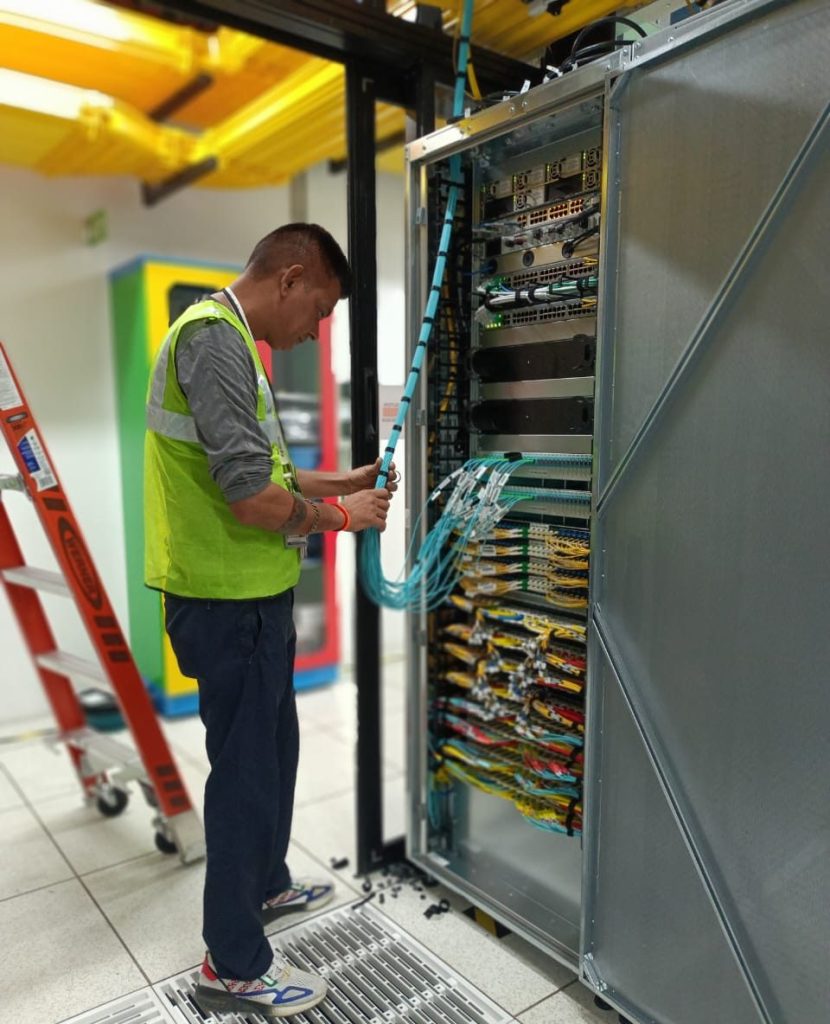
A data center consists of various components that work together to ensure efficient and reliable operations:
- Servers: The primary computing units that process and store data.
- Networking Equipment: Routers, switches, and firewalls that manage data traffic and ensure secure communication.
- Storage Systems: Devices like hard drives and SSDs that store data.
- Power Supply: Backup generators and uninterruptible power supplies (UPS) to ensure continuous operation.
- Cooling Systems: HVAC systems to maintain optimal temperature and humidity levels.
- Security Systems: Physical and cybersecurity measures to protect data and infrastructure.
Importance of Data Centers
Data centers are crucial for the continuity of daily operations across businesses. They support critical applications, host complex data analytics programs, and enable cloud storage and computing solutions. From streaming high-definition videos to managing billions of financial transactions, data centers ensure seamless data delivery and connectivity.
Evolution of Data Centers
From housing basic computer systems to becoming sophisticated facilities that support advanced cloud computing and big data analytics, data centers have evolved significantly. This evolution has been driven by advancements in technology and increasing demands for processing power and data storage capacity.
What are Hyperscalers?
Hyperscalers are companies that provide scalable and robust computing environments, capable of scaling up to thousands of servers to meet the demand for cloud computing resources. These entities manage massive data centers that support large-scale cloud environments.
Key Characteristics of Hyperscalers
- Massive Scale: Hyperscalers operate at a scale much larger than traditional data centers.
- Automation: They use advanced automation tools to manage and orchestrate vast computing resources.
- Global Presence: Typically have data centers located across multiple geographical locations to reduce latency and improve user experience.
Role of Hyperscalers in Modern Computing
Hyperscalers like Amazon AWS, Google Cloud, and Microsoft Azure lead the market with extensive cloud services. They enable companies of all sizes to leverage cloud computing without the need to invest in physical infrastructure.
Impact of Hyperscalers
- Unmatched Scalability: Hyperscale data centers can scale up or down based on demand, offering businesses the flexibility to pay only for the resources they use.
- Technological Innovations: Hyperscalers lead the way in data center technology, developing custom hardware, energy-efficient cooling solutions, and software-defined networking to optimize performance and reduce costs.
- Global Reach: With data centers spread across multiple regions, hyperscalers enable businesses to deploy applications closer to their end-users, improving performance and reducing latency.
- Market Impact: Hyperscalers drive competition and innovation in the IT industry. They influence pricing models, set benchmarks for efficiency, and challenge traditional data center operators to adopt more advanced technologies.
Future Trends
The future of data centers and hyperscalers looks toward greener technologies and stronger data security measures. Innovations such as liquid cooling technologies and the use of renewable energy sources are becoming prevalent. Additionally, the growth of edge computing is influencing data center strategies, with data processing being moved closer to the source of data creation to reduce latency.
Data centers continue to evolve with advancements in technology. Key trends include:
- Edge Computing: Bringing data processing closer to the source of data generation to reduce latency and improve performance.
- Sustainability: Implementing energy-efficient designs and renewable energy sources to minimize environmental impact.
- AI and Automation: Leveraging artificial intelligence for predictive maintenance, automated monitoring, and enhanced security.
Conclusion
Data centers are the backbone of modern IT infrastructure, supporting everything from small businesses to global enterprises. Hyperscalers have revolutionized the industry by providing scalable, cost-effective cloud services. As technology continues to advance, data centers will evolve to meet the growing demands for data processing, storage, and security.
By understanding the components, security measures, and trends in data centers, businesses can make informed decisions about their IT infrastructure needs. Whether opting for an enterprise data center, colocation, or leveraging the power of hyperscalers, the future of data centers promises to be dynamic and innovative.
Recent Blog Posts
-
Significance of Fiber Optic Cables in Emerging Quantum Technologies
-
Everything You Need to Know About Structure Network Cabling

-
6 Benefits Of Wireless Networking + Wireless Networking Solutions

-
Network Rack Dressing Tools: Essential Equipment for Efficient Cable Management

-
Network Cable Management 102: Tools of the Trade
