Wi-Fi acceptance · Buyer guide
Wi-Fi acceptance should test the applications people use under representative office conditions. A speed test is fast, yet calls freeze when the meeting room fills. The buying brief should define an application experience under representative conditions. That makes acceptance more useful than a single throughput screenshot collected from an empty office.

Wi-Fi acceptance: define representative calls
List the devices, meeting applications, busy locations and expected concurrent use. Include stationary and moving users where relevant. Record the network and internet conditions during the trial. Cisco’s campus design guide separates wireless and wired design considerations; acceptance should likewise avoid attributing every application symptom to the radio layer.
Agree evidence and limits with the service owner
Ask the engineer to propose appropriate observations for delay, variation, loss, roaming and user experience, with a documented measurement method. Do not copy a universal threshold without confirming the application and test conditions. Include a wired comparison where it helps separate the WLAN from internet, endpoint or application constraints.

Repeat the failed case after correction
Retain the test location, client identity, timing and relevant configuration context. A configuration change followed by a different client in a different room is a weak comparison. Record unresolved cases and the party responsible for each. The acceptance decision should refer to the agreed scenarios, not an unqualified promise that every future call will be perfect.
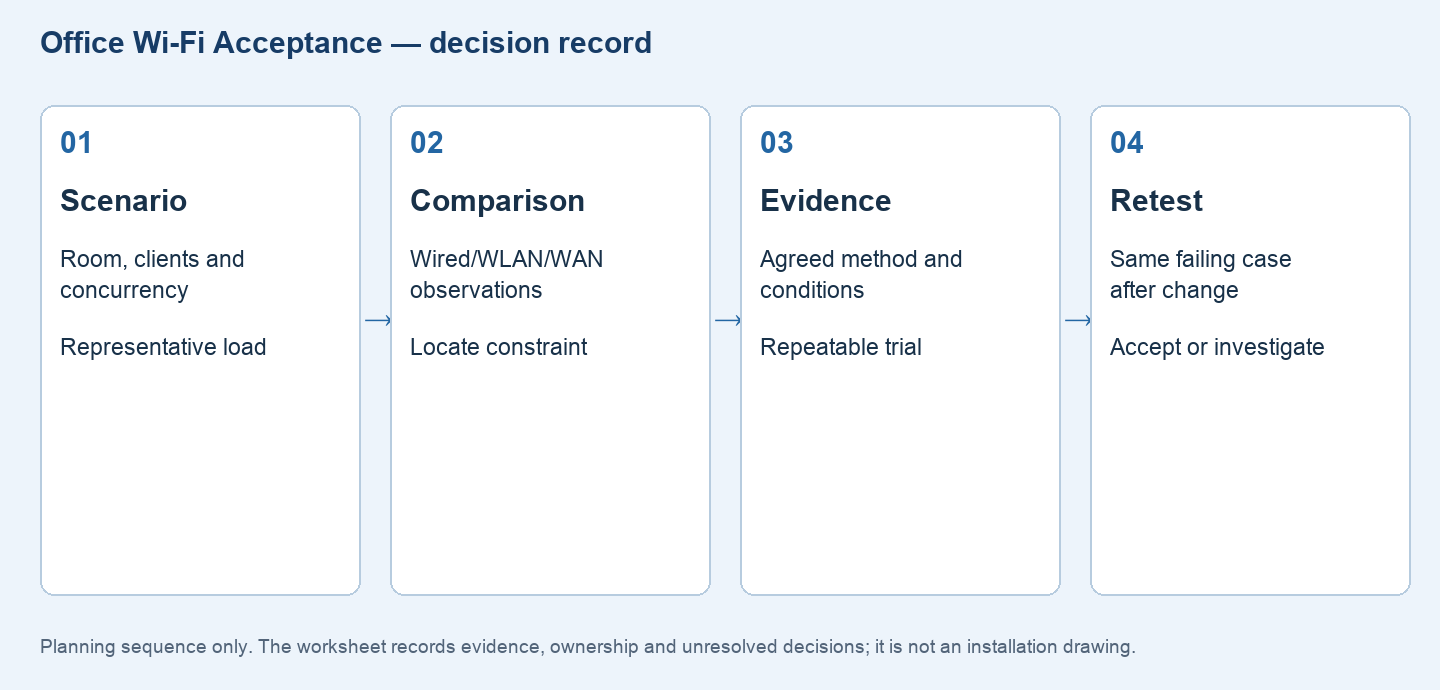
Wi-Fi acceptance: test worksheet
Use the rows below to compare proposals. Enter the actual evidence reference, accountable owner and unresolved decision against each item. Keep provisional assumptions visible when asking bidders to revise their prices.
| Decision | Evidence to request | Purpose |
|---|---|---|
| Scenario | Room, clients and concurrency | Representative load |
| Comparison | Wired/WLAN/WAN observations | Locate constraint |
| Evidence | Agreed method and conditions | Repeatable trial |
| Retest | Same failing case after change | Accept or investigate |
Questions buyers ask
Is a speed test useless?
No. It is one observation, but it does not represent every requirement of an interactive voice or video session.
Should we test with staff devices?
Include representative approved client types because radio capability, drivers and application behaviour can differ.
Can one room represent the whole office?
Only if the agreed scope supports that inference. Identify materially different rooms and usage patterns.
Who sets the pass criteria?
The service owner and responsible engineer should agree application-specific criteria and a practical method before the trial.
What should we send RIAM?
Locations, reported symptoms, device types, expected concurrency and available wired or internet observations help shape a useful acceptance plan.
Manufacturer research and scope
Cisco: campus LAN and wireless design guide, reviewed 31 October 2026. The buying worksheet is RIAM editorial analysis; it is not an OEM-approved design. Confirm current product, software, support and local requirements for the selected bill of materials.
Brief RIAM with the evidence
Share the existing inventory, the specific service or buying decision, available records and access constraints with RIAM’s wireless services team. Ask for a scoped assessment with deliverables, responsibilities, exclusions and acceptance evidence. Site work and production changes require the responsible owners’ approved plan.
Also read our meeting-room capacity brief and Wi-Fi survey deliverables.